Last updated 2026-07-27
TL;DR
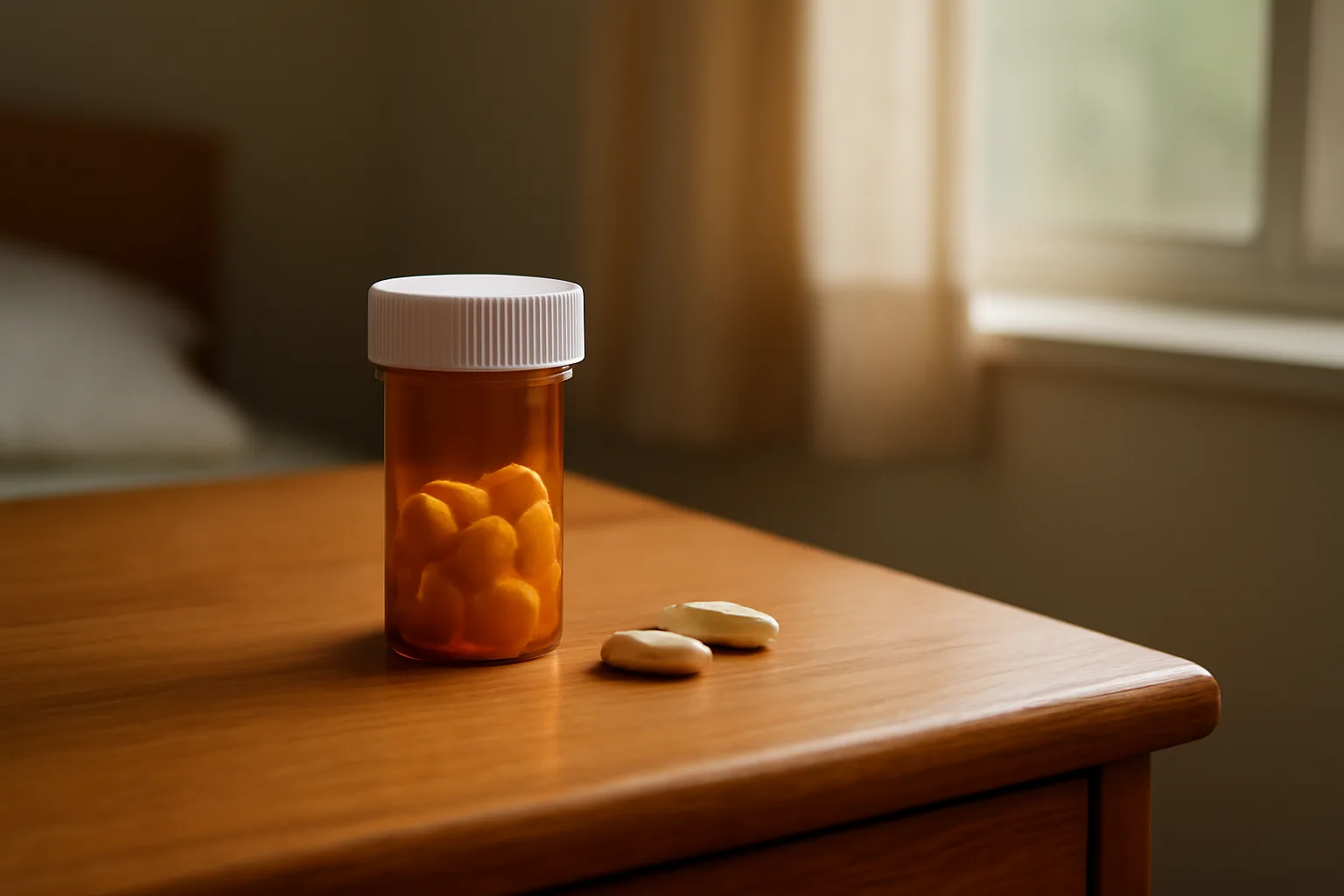
No, most compounded enclomiphene capsules and troches don't require refrigeration. USP guidelines classify room temperature as 68-77°F (20-25°C), and most compounding pharmacies label enclomiphene for room-temp storage. Always follow the specific label from your dispensing pharmacy, since formulation (capsule vs. troche vs. liquid) and their in-house stability testing can change that answer.
Does enclomiphene need to be refrigerated?
For most patients, no. Enclomiphene citrate, when dispensed as an oral capsule from a compounding pharmacy, is typically stable at controlled room temperature. The United States Pharmacopeia (USP) defines controlled room temperature as 68-77°F (20-25°C), with excursions permitted between 59-86°F during shipping or short-term storage [1]. Compounding pharmacies base their beyond-use dates and storage instructions on this standard unless their own stability testing says otherwise. That said, this is a "check the label" answer, not a blanket rule. Compounded drugs aren't FDA-approved products with a manufacturer's package insert and a validated multi-year shelf life. Each compounding pharmacy runs its own (or a third-party lab's) stability testing on its specific formulation, base, and packaging, and that testing determines the beyond-use date (BUD) and storage condition printed on your bottle. Two pharmacies compounding enclomiphene into capsules can legally assign different BUDs and different storage instructions depending on their process and testing data. The practical rule: read the label every time. If it says "store at room temperature," the fridge isn't necessary and in some cases isn't even recommended (condensation inside a pill bottle pulled in and out of a cold fridge can actually introduce moisture problems). If it says "refrigerate," don't skip that step to save a step, because that instruction reflects that specific pharmacy's actual stability data for their formulation.
What temperature should enclomiphene be stored at?
Absent a specific pharmacy instruction otherwise, keep enclomiphene at standard room temperature, roughly 68-77°F (20-25°C), away from direct sunlight, heat sources, and high humidity [1]. A bathroom medicine cabinet, which regularly swings in temperature and humidity from showers, is one of the worst common storage spots for any oral medication, enclomiphene included. A closed drawer, a cabinet in a bedroom or hallway, or a dedicated pill organizer kept out of the kitchen (ovens and dishwashers throw heat) all work better. The goal is a stable environment, not a cold one. Big daily temperature swings do more to degrade many compounded formulations than a slightly warm room does. If you live somewhere that regularly hits 90°F+ indoors without air conditioning, or you're storing medication in a car glovebox or a hot garage, that's a genuine risk to potency, and it's worth asking your pharmacy whether refrigeration is a safer bet for your specific situation.
Why isn't there a standard, FDA-set storage requirement for enclomiphene?
Because enclomiphene itself was never approved by the FDA as a standalone drug. A branded version, Androxal, went through Phase 3 clinical trials for secondary hypogonadism in the early 2010s but the sponsor (Repros Therapeutics) did not bring it to FDA approval, and the program was ultimately discontinued [2]. No enclomiphene product carries an FDA-approved label, which means there's no official FDA-reviewed storage instruction, no official package insert, and no manufacturer-set shelf life the way there is for, say, testosterone cypionate. What's sold today, including everything shipped for men researching it as a TRT alternative, is compounded medication, prepared by a licensed compounding pharmacy under state pharmacy board oversight and, for many, under FDA's 503A compounding framework rather than as an approved commercial drug [3]. That distinction matters for storage because it means the beyond-use date and storage conditions come from the compounding pharmacy's own testing (or from USP compounding chapters like USP <795>), not from an FDA-reviewed New Drug Application. If you want the fuller picture of how compounded enclomiphene differs from an approved pharmaceutical or a research-chemical supplier, Enclomiphene Direct compounding pharmacy vs research supplier covers that ground directly. This is also why you should treat storage instructions as pharmacy-specific rather than drug-wide. The compounding pharmacy that formulates and dispenses your prescription is the authority on your bottle's storage and expiration, not a generic answer from the internet (including this one).
How long does compounded enclomiphene last, and what's a beyond-use date?
Compounded medications get a "beyond-use date" (BUD) instead of a manufacturer expiration date. USP General Chapter <795>, which governs nonsterile compounding, sets default BUD limits when a pharmacy hasn't done its own stability study: generally up to 6 months for non-aqueous formulations stored in the manufacturer's original container at controlled room temperature, though pharmacies frequently assign shorter, more conservative dates, and can assign longer ones if they have validated stability data supporting it [4]. In practice, most patients see BUDs in the range of 90 to 180 days on compounded enclomiphene capsules, though this varies by pharmacy. That's meaningfully shorter than the 1-2 year shelf life you'd see on an FDA-approved tablet in a sealed manufacturer bottle, and it's a direct tradeoff of getting a compounded, non-mass-manufactured product. Don't take medication past its labeled BUD. Potency can degrade gradually rather than falling off a cliff, so an expired capsule probably isn't dangerous, but you also have no guarantee you're getting a full, reliable dose, which somewhat defeats the purpose of dosing consistently for a hormone-sensitive protocol.
Does heat or humidity actually break down enclomiphene?
Enclomiphene citrate is a small-molecule SERM (selective estrogen receptor modulator) chemically related to clomiphene, and like most oral pharmaceutical compounds, it's vulnerable to hydrolysis (moisture-driven breakdown) and to accelerated degradation at elevated temperatures. USP stability guidance is built around exactly this: the reason controlled room temperature exists as a defined range is that most small-molecule drugs degrade measurably faster outside 68-77°F, especially with humidity added [1]. There isn't a public, peer-reviewed accelerated-degradation study specifically for compounded enclomiphene capsules that this article can point you to; that data, if it exists, sits with individual compounding pharmacies as proprietary stability testing, not in a journal. That's an honest gap. What's not in doubt is the general pharmaceutical chemistry: heat and moisture are the two things that most reliably shorten a drug's usable life, which is why every legitimate compounding pharmacy's storage instructions focus on exactly those two variables.
Can I travel with enclomiphene, and does TSA care?
Yes, you can travel with compounded enclomiphene, including on flights. The TSA doesn't require medications to be in original packaging for domestic travel, but keeping it in the labeled pharmacy container makes screening faster and avoids any questions, especially if you're carrying capsules loose in a pill organizer through a security checkpoint [4]. For storage in transit: a carry-on kept at cabin temperature is fine. Checked luggage in a cargo hold can experience temperature swings, particularly on the tarmac in summer heat or winter cold, so carry-on is the safer choice if you're traveling with a limited supply. A hot car is the other classic travel mistake: don't leave medication in a parked car for hours in warm weather, since interior car temperatures can exceed 120°F even on a mild day. If your prescription happens to be one of the less common liquid or troche (dissolving lozenge) formulations rather than a capsule, ask your pharmacy specifically about travel stability, since liquid formulations are generally more temperature-sensitive than solid capsules.
What's the difference between enclomiphene and clomiphene, and does it affect storage?
Clomiphene citrate (brand name Clomid) is actually a mixture of two isomers: enclomiphene (the trans-isomer) and zuclomiphene (the cis-isomer) [5]. Enclomiphene is the isomer responsible for most of the testosterone-raising, anti-estrogenic activity at the hypothalamus; zuclomiphene has a longer half-life, weaker estrogenic activity, and is thought to contribute more of clomiphene's side-effect profile with less of its benefit for male hypogonadism. That's the whole reason enclomiphene monotherapy was developed and studied in the first place: to isolate the isomer that does the job doctors actually want for low testosterone. From a storage standpoint, this distinction doesn't change much. Both molecules are still small-molecule citrate salts with similar general stability behavior, and FDA-approved clomiphene (which does carry an official label) lists room temperature storage, specifically 68-77°F (20-25°C) with excursions permitted to 59-86°F, per its FDA-approved labeling . Compounded enclomiphene pharmacies tend to mirror that same range, which is consistent with the general USP controlled-room-temperature standard rather than anything unique to the molecule.
Why do people choose enclomiphene over TRT if fertility is the concern?
Exogenous testosterone (injections, gels, pellets) shuts down the hypothalamic-pituitary-gonadal axis. The brain senses testosterone coming in from outside, stops sending the signals (LH and FSH) that tell the testes to produce their own testosterone and sperm, and testicular volume and sperm production typically decline as a result. This is well documented: standard TRT is a recognized cause of iatrogenic infertility, and clinical guidance from the American Urological Association explicitly advises against TRT in men who want to preserve current fertility . Enclomiphene works differently. As a SERM, it blocks estrogen receptors at the hypothalamus, which the brain reads as "estrogen is low," prompting it to increase GnRH, LH, and FSH output. That, in turn, stimulates the testes to produce more of their own testosterone, along with continued sperm production, since the signal to the testes stays on rather than shutting off. This is the core mechanistic reason enclomiphene is discussed as a fertility-sparing alternative to TRT for men with secondary hypogonadism. Be precise about what the evidence actually supports here, though: mechanistic plausibility and small studies showing preserved LH, FSH, and testicular volume are not the same as a large randomized trial proving fertility outcomes (actual pregnancy rates) improve versus TRT. The Phase 3 Androxal trials measured testosterone levels and semen parameters as surrogate markers, not live birth or conception rates [2]. If you want the underlying study data rather than a summary, Enclomiphene Direct human studies and Enclomiphene Direct animal studies vs human evidence both dig into what's actually been measured, in which populations, and for how long.
How should I store enclomiphene if I'm also taking other medications, like hCG?
Storage doesn't interact between medications the way drug metabolism does, so you don't need to store enclomiphene near or away from other prescriptions for any pharmacological reason. What does matter is that hCG, if you're combining protocols, is a different animal entirely: it's a peptide hormone, it typically comes as a lyophilized (freeze-dried) powder that must be reconstituted, and once mixed with bacteriostatic water it generally does require refrigeration, unlike enclomiphene capsules. Don't let the two storage rules blur together. It's an easy mistake to assume that because one hormone-related med in your regimen needs the fridge, they all do, or the reverse (assuming enclomiphene's room-temp status means hCG doesn't need cold storage either, which would spoil a reconstituted vial fast). If you're weighing hCG against enclomiphene for fertility preservation and want the mechanism-level comparison, Enclomiphene Direct vs hcg lays out how the two actually differ, more than in storage but in what each one does to the axis. If your protocol involves multiple compounded medications, ask your pharmacy for a single written storage sheet covering everything you're on. It's a small ask that saves real confusion three months in.
What if enclomiphene gets left in a hot car or a hot mailbox during shipping?
A brief excursion, an hour or two above 86°F during shipping, generally falls within the USP-permitted excursion range and isn't cause for alarm; that range (59-86°F) exists specifically because real-world shipping and handling can't guarantee perfect climate control [1]. A single hot afternoon in a mailbox almost certainly isn't a problem. Repeated or prolonged heat exposure is a different story. If a package sat in a mail truck or on a porch for multiple days during a heat wave, or a bottle spent a week in a car console through a summer, potency loss becomes a real possibility even if the capsules look and smell normal (most oral medications don't show visible signs of degradation). When in doubt, contact the dispensing pharmacy. A reputable compounding pharmacy will tell you honestly whether a shipping delay in extreme weather is worth replacing the product, and many will do so at low or no cost if their courier is responsible for the delay. This is also a reasonable moment to double check who you're actually getting your prescription through: providers who route through named, accountable pharmacy partners (rather than an unnamed dropship arrangement) tend to have clearer answers and clearer accountability when something like this happens. Enclomiphene Direct's model, for instance, routes prescriptions through a provider-reviewed process to a named, licensed fulfilling pharmacy, which is exactly the kind of setup that makes a "my package sat in the heat, now what" question answerable by a real person rather than a support ticket black hole.
How can I tell if my enclomiphene has gone bad?
For solid oral capsules, visible degradation is unreliable. Discoloration, a strong or unusual odor, capsules sticking together, or visible moisture inside the bottle are all worth acting on (stop using and contact the pharmacy), but the absence of these signs doesn't guarantee full potency past the beyond-use date. Chemical degradation of the active ingredient can happen well before anything looks or smells different. The more reliable signal, honestly, is the calendar. If you're past your labeled BUD, treat the product as unreliable regardless of appearance, and reorder rather than pushing your dose out further hoping the pills are still "mostly fine." For a hormone-sensitive protocol where you or your prescriber is tracking labs (testosterone, LH, FSH) to judge response, a partially degraded batch introduces a confusing variable into exactly the numbers you're trying to interpret cleanly. If you notice your typical symptom response changing (energy, libido, whatever you track) without any dose or protocol change on your end, an expired or heat-damaged batch is worth ruling out as one possible explanation, alongside the more common culprits like normal biological variability or a missed dose.
Frequently asked questions
Does enclomiphene need to be refrigerated after opening?
Usually not. Most compounded enclomiphene capsules stay at controlled room temperature (68-77°F) whether the bottle is sealed or opened, per general USP storage standards. Refrigeration isn't typically required after opening unless your specific pharmacy's label says otherwise, which does happen with certain formulations or bases, so always defer to your bottle's printed instructions.
What temperature is too hot for enclomiphene storage?
USP allows brief excursions up to 86°F (30°C) during shipping or short-term handling, but sustained storage above that, like a hot car interior or an un-air-conditioned room in summer, risks accelerated potency loss. Sustained exposure well above 86°F for days at a time is the scenario to actually worry about, not a single warm afternoon.
Can I store enclomiphene in the bathroom medicine cabinet?
It's not ideal. Bathrooms see frequent humidity and temperature swings from showers, which is worse for most oral medications than a slightly warm but stable room. A bedroom drawer or hallway cabinet, away from direct sunlight and heat vents, is a better everyday storage spot.
Is compounded enclomiphene FDA-approved?
No. Enclomiphene never received FDA approval as a standalone drug; the branded candidate Androxal completed Phase 3 trials but was never brought to approval by its sponsor, Repros Therapeutics. What's available today is compounded by licensed pharmacies under state and FDA compounding oversight (503A), not sold as an approved commercial pharmaceutical.
How is enclomiphene different from clomiphene (Clomid)?
Clomiphene citrate is a mixture of two isomers, enclomiphene and zuclomiphene. Enclomiphene is believed to drive most of the testosterone-raising effect, while zuclomiphene has a longer half-life and weaker relevant activity. Enclomiphene alone was developed to isolate the more favorable isomer for male hypogonadism treatment.
Does enclomiphene preserve fertility better than TRT?
Mechanistically, yes: enclomiphene keeps the brain's LH/FSH signal to the testes active, while exogenous TRT typically shuts that signal down and can reduce sperm production and testicular volume. But large trials proving improved pregnancy or live-birth rates versus TRT don't exist yet; the evidence is mechanistic and based on surrogate markers like LH, FSH, and testicular volume.
What is a beyond-use date and how is it different from an expiration date?
A beyond-use date (BUD) is assigned by a compounding pharmacy based on USP Chapter <795> guidelines or its own stability testing, and it's typically shorter than a manufacturer expiration date on an FDA-approved drug. Compounded enclomiphene commonly carries a BUD in the 90-180 day range, though this varies by pharmacy.
Can I travel on a plane with enclomiphene?
Yes. TSA doesn't require original packaging for medications on domestic flights, though keeping it in the labeled pharmacy bottle speeds up screening. Keep it in your carry-on rather than checked luggage, since cargo holds can see wider temperature swings than the cabin.
Does heat exposure during shipping ruin enclomiphene?
A short excursion (an hour or two) within the USP-permitted 59-86°F range generally isn't a concern. Multiple days of extreme heat during shipping is a legitimate reason to contact the dispensing pharmacy and ask whether the product should be replaced before you start dosing from it.
How do I know if my enclomiphene has degraded or gone bad?
Visible signs like discoloration, odor, or clumping are worth acting on, but chemical potency loss often shows no visible signs at all. The most reliable check is the beyond-use date printed on your label; treat any product past that date as unreliable regardless of appearance.
Does enclomiphene storage differ from testosterone storage?
Yes, meaningfully. Injectable testosterone (like cypionate in oil) is generally stored at room temperature too, but it's an FDA-approved product with manufacturer-tested shelf life, while compounded enclomiphene relies on pharmacy-specific stability testing and a shorter beyond-use date. Always follow each product's own label rather than assuming they match.
Should enclomiphene and hCG be stored the same way?
No. Enclomiphene capsules are typically fine at room temperature, but reconstituted hCG (mixed with bacteriostatic water) generally needs refrigeration to remain stable, since it's a peptide hormone rather than a small-molecule oral drug. Check the specific storage instructions for each medication separately.
Sources
- USP General Notices, Controlled Room Temperature definition: Controlled room temperature is defined as 68-77°F (20-25°C) with permitted excursions between 59-86°F
- ClinicalTrials.gov, Androxal (enclomiphene citrate) Phase 3 study record: Androxal (enclomiphene) underwent Phase 3 trials for secondary hypogonadism but was not approved by FDA
- USP General Chapter <795>, Pharmaceutical Compounding - Nonsterile Preparations: USP <795> sets default beyond-use date limits for nonsterile compounded preparations absent pharmacy-specific stability data
- FDA-approved Clomid (clomiphene citrate) prescribing information: Clomiphene citrate is a mixture of enclomiphene (trans-isomer) and zuclomiphene (cis-isomer), and is labeled for room temperature storage
- American Urological Association, Testosterone Deficiency Guideline (2018, amended 2023): AUA guidance advises against testosterone therapy in men who currently desire fertility due to its suppressive effect on spermatogenesis